— 13 minutes — Groover
How Playlist Pitching Helps Independent Artists Get Synced
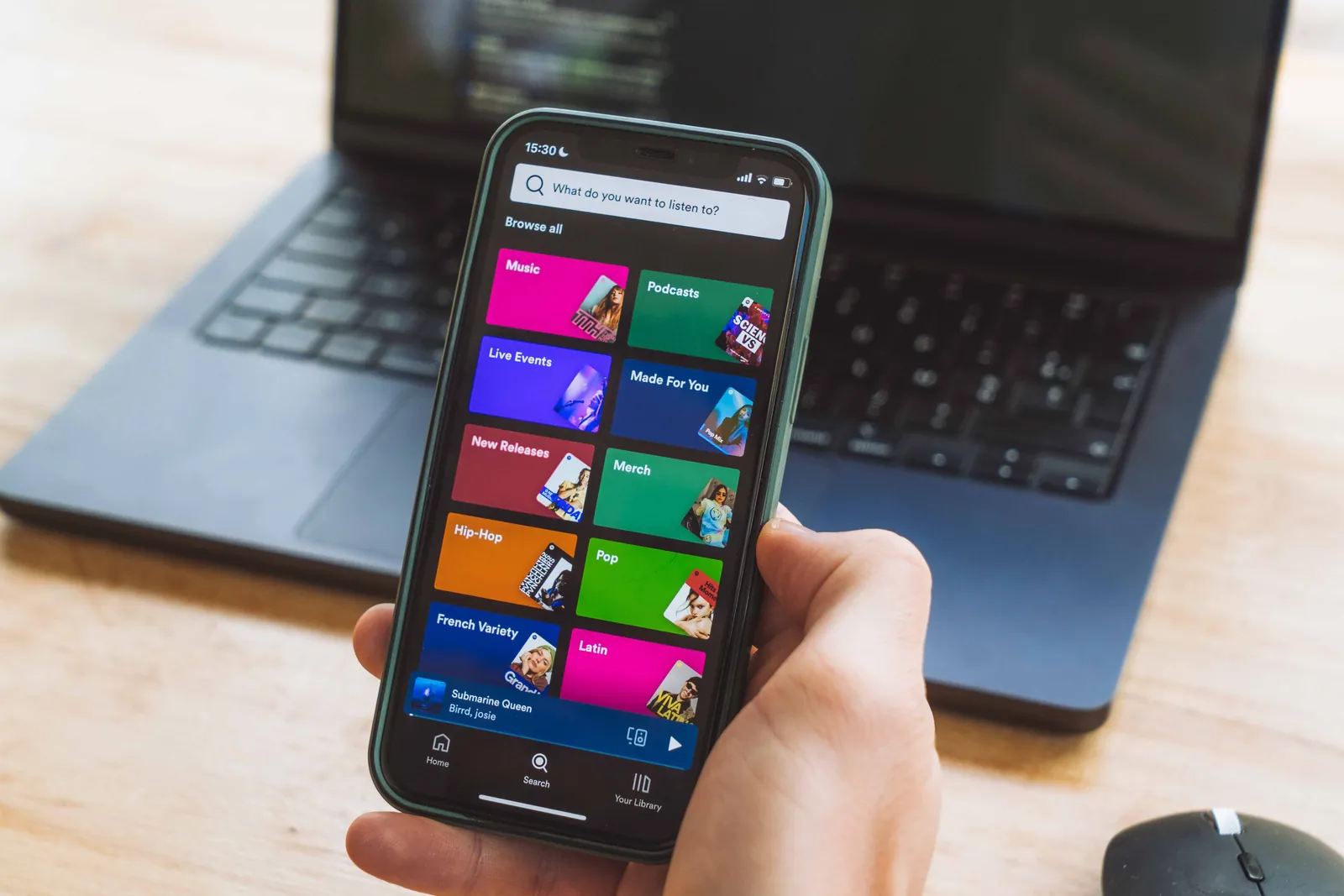
Guest post by Groover, the music promotion platform and That Pitch partner. The opening section on sync is from That Pitch.
Short answer: Playlist pitching can help independent artists get synced because it keeps you active and visible, and an active, growing artist profile makes your music more attractive to libraries and filmmakers. To pitch, submit each release to Spotify's editors through the free pitching tool in Spotify for Artists, and to independent curators who add the tracks they genuinely like. It works best when your release is ready weeks ahead, every pitch is targeted, and you avoid any service that guarantees streams or placements.
Why promoting your own music helps with sync
More and more libraries want real, active artists, not just production music. Filmmakers and editors are looking for independent artists who are out there releasing, building fans and getting played, because it makes the music feel real on screen. So promoting your own music isn't separate from sync. It helps it.
Sync used to lean heavily on production music: tracks written to a brief, often by composers with no public artist profile. That still has its place, but when a library or a filmmaker looks you up and finds recent releases, a filled-out profile and people actually listening, it tells them you are a working artist with your own sound and story. For more on how the two worlds differ, see the difference between production music and commercial releases.
The same release, the same clean metadata and the same growing audience serve both streaming and sync. Playlists are one of the most practical ways to stay active between releases and keep new listeners finding you. In the rest of this guide, our partner Groover explains how playlist pitching works, so each release keeps you active and visible, and how to do it without putting your music at risk.
Why playlist pitching still matters
Playlist pitching is still a very effective way for an independent artist to get new ears on a release. It is also more competitive than ever. According to Luminate's 2025 Year-End Music Report, streaming services received an average of 106,000 new tracks every single day in 2025, and 88% of all tracks received 1,000 plays or fewer over the whole year. In that flood, the right playlist placement can be the difference between a release that vanishes in a week and one that keeps finding listeners for months.
The good news? Pitching is a skill, not a lottery. Below, you'll learn which types of playlists you can actually target, how to prepare your release before you pitch, how to approach both Spotify's editors and independent curators using tools like Groover, how to spot services that could get your music penalized, and how to turn a playlist add into real, lasting fans.
Editorial, algorithmic, independent: know which playlists you're pitching
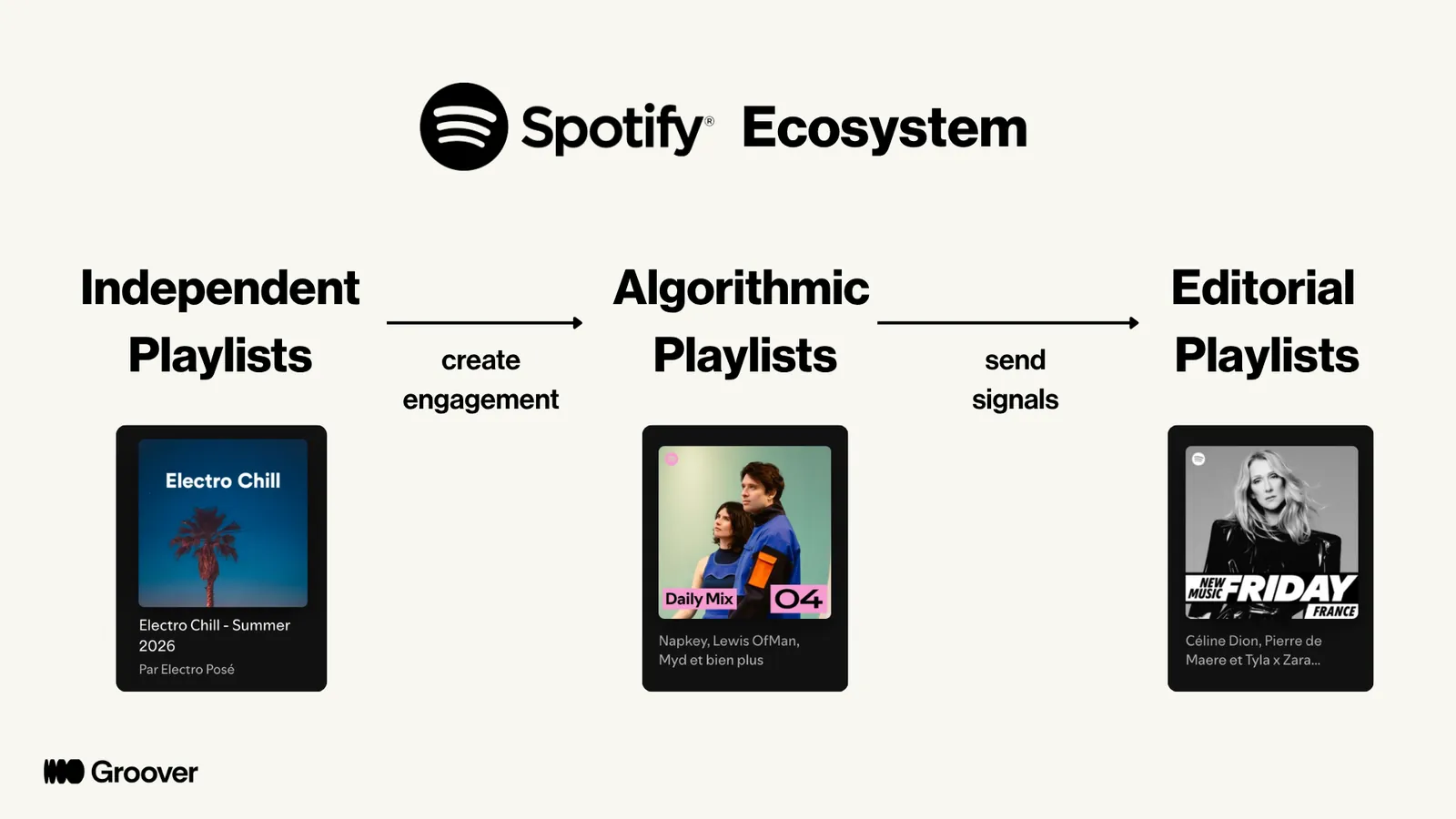
Before you send a single pitch, it helps to understand that "getting on playlists" covers three very different worlds, each with its own rules.
- Editorial playlists are curated by Spotify's in-house editors, organized by genre, mood or activity. The only official way to reach them is the free pitching tool in Spotify for Artists. There is no email address, no back door, and no one who can sell you a spot.
- Algorithmic playlists such as Release Radar, Discover Weekly, Daily Mixes and Radio are generated for each listener individually. You can't pitch them directly, but you can feed them positive signals: saves, repeat listens, follows and adds to listeners' own playlists.
- Independent playlists are created by individuals, blogs, labels, collectives and brands. Some have a few hundred followers, others hundreds of thousands. These are the curators you can contact directly, and for most independent artists they are the most realistic first step.
These three worlds are connected. When real listeners discover your track on an independent playlist and save it, those signals can help algorithmic recommendations pick it up. And Spotify itself advises artists who aren't selected by editors to keep building their fanbase and engaging with listeners to stay on the editors' radar. A good playlist strategy works on all three fronts at once.
Before you pitch: get your release ready
Most pitches are lost before they're even written, because the release behind them isn't ready. A curator who clicks through to an empty artist profile or a track with a 40-second intro will move on quickly. Here's what to sort out first.
- Deliver your music early. Spotify asks for music to be delivered at least 7 days before release so editors have time to listen, but that's the bare minimum. Groover recommends delivering at least 3 to 4 weeks ahead. Extra lead time gives you room to pitch, prepare assets and fix any metadata issues.
- Polish your Spotify for Artists profile. Use a recent, high-quality photo, a bio that says who you are and what you sound like in a few lines, your social links, and an Artist Pick pointing to your latest release. Editors and curators check this page to judge whether you're an active, serious project.
- Get your metadata right. Correct artist names, featured artists, songwriter credits, genre and language matter more than most artists think. They help platforms categorize your track and help curators find it. If you also pitch your music for sync licensing, clean metadata, cleared samples and ready-to-send stems will serve you there too, so prepare a release once and use it everywhere. See metadata requirements for music libraries.
- Choose the right song. If you have several tracks, pitch the one with the strongest first 30 seconds. Playlist listeners skip fast, and a high skip rate can hurt a track's performance on the playlist.
How to pitch Spotify's editorial playlists
Once your distributor has delivered the track, it appears under Music, then Upcoming, in Spotify for Artists. Select it, fill in the pitch form and submit. A few rules from Spotify's official guidance are worth knowing by heart:
- You can only pitch one unreleased song at a time. The next slot opens once that song goes live.
- Once a song is released, it can no longer be pitched to editors.
- Pitching at least 7 days before release adds the song to your followers' Release Radar playlists.
- Editors may pick a different song from the release than the one you pitched, and pitching never guarantees placement.
That third point is reason enough to pitch every single release, even if you think your chances with editors are slim. A guaranteed spot in your followers' Release Radar is free exposure to the people most likely to save your track.
When filling in the form, be precise. Choose genres, moods and instruments that genuinely describe the song rather than the most popular tags. Then use the description field to give editors what the audio can't: the story behind the song, the artists your sound sits alongside, and where you're based. If you have real numbers to share, such as a recent sold-out show, add them. Keep it factual and specific. Editors read a huge number of pitches, and concrete details stand out far more than enthusiastic adjectives.
How to pitch independent playlist curators
Independent curators are where most indie artists build their first real playlist momentum. The key is targeting, not volume. Twenty carefully chosen playlists will almost always do more for you than two hundred random ones.
Start by searching Spotify for artists who sound like you, then look at the playlists that feature them. Listen to a few of those playlists all the way through. Do they really match your sound, energy and production style? Are they updated regularly? Does the follower count look natural? A small, active playlist with listeners who actually save tracks is worth more than a huge one nobody listens to.
Next, find out how each curator prefers to be contacted. Many list an email or a submission form in their playlist description or social profiles. Timing matters too. Unlike editors, independent curators usually need a live Spotify link, so pitch them on release day or shortly after.
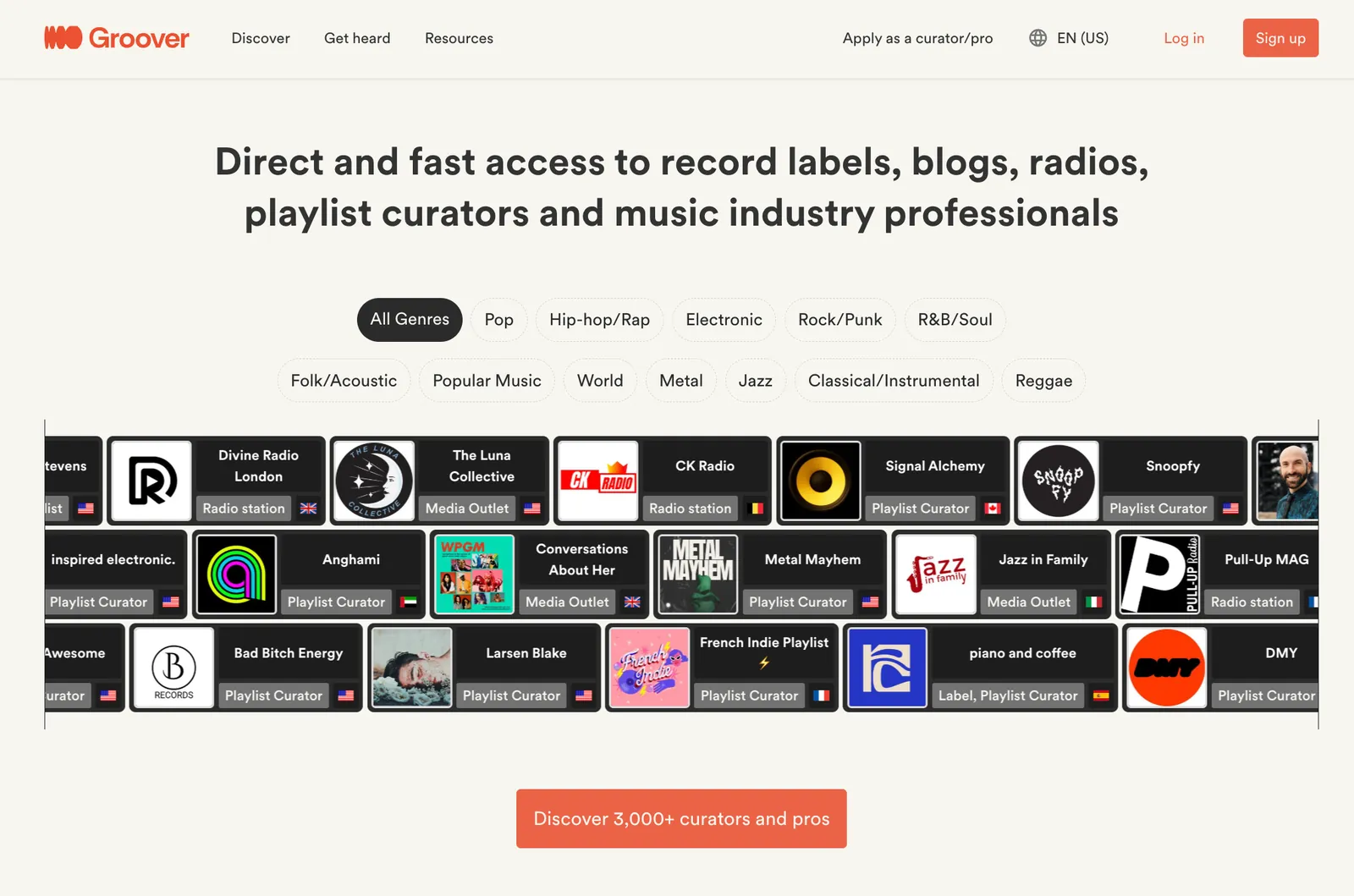
The hardest part is often getting an answer at all. That's the problem promotion tools like Groover set out to solve. On Groover, you choose curators by genre, country and audience, and each one commits to listening to your track and replying within 7 days, or you get your credits back. Groover says the platform gathers more than 1,500 Spotify playlist curators alongside other music pros like radio stations, blogs and labels. You pay for a guaranteed listen and honest feedback, never for a placement: curators only add the tracks they genuinely like, which Groover says keeps campaigns in line with Spotify's rules. Even a "no" comes with a reason, and that feedback is valuable for your next pitch.
For more ideas, read Groover's tips to optimize your playlisting campaigns.
How to write a pitch that gets read
Whether you're writing to an editor or a curator, the same principles apply. Curators often receive dozens of submissions a day, so your message has a few seconds to earn a listen.
- Lead with the sound. Describe your track in one sentence, with two or three honest reference points.
- Show you know the playlist. Mention it by name and, ideally, a track on it that yours would sit well next to.
- Keep it short. Four or five sentences is plenty. Your bio can live on your profile.
- Give one piece of context. The story behind the song, a notable collaboration or a real milestone. Never an exaggeration.
- Make listening effortless. One streaming link, no downloads, no attachments.
Groover also has more pitch tips and examples.
Finally, take rejections gracefully. If a curator passes, thank them and move on, or ask politely what didn't fit. Curators remember artists who are pleasant to work with, and the same curator might add your next release.
Red flags: fake streams and paid placements
When results feel slow, offers of "guaranteed streams" or "guaranteed playlist placement" can look tempting. Don't take them. Spotify is explicit that any service guaranteeing streams or playlist placement in exchange for money isn't legitimate, and many of these services rely on automated fake plays.
The consequences are real. Under Spotify's artificial streaming policy, detected artificial streams earn no royalties, are removed from public stream counts and charts, and don't help you with recommendation algorithms. In more serious cases, the song can be pulled from playlists. Spotify has also been charging labels and distributors per track when flagrant artificial streaming is detected, and distributors may in turn warn artists or remove their catalog.
To attract real listeners and fans, stick to legitimate pitching platforms like Groover, which says it vets every curator who joins and works with experts to detect playlists with fake streams.
After the add: turning playlist streams into fans
Landing on a playlist is a beginning, not a finish line. Streams that never turn into followers disappear the day you're rotated out. Here's how to make each placement count.
- Thank and share. Send the curator a quick thank-you and share the playlist on your socials. It helps their playlist grow, shows you're a good partner, and makes them more likely to listen to your next release.
- Read your data. In Spotify for Artists, check which playlists are sending you listeners, how many of those listeners save the track, and whether your follower count moves. A playlist that brings fewer streams but a high save rate is often more valuable than a bigger one with listeners who skip.
- Give new listeners somewhere to go. Update your Artist Pick, keep your profile fresh, and make sure your next release is already planned. Releasing regularly gives the curators who liked you a reason to come back, and gives your followers something new in their Release Radar.
- Remember why streams matter. Spotify now requires a track to reach at least 1,000 streams in a year before it generates royalties. A handful of well-matched placements can be what gets a song past that threshold, and the engagement it builds can open doors well beyond Spotify, including sync.
Put the same release to work in sync
Once a release is out and finding listeners, the same tracks can work for you in sync at the same time. With non-exclusive sync libraries, one catalog can sit in many libraries while you keep promoting it, and every fan you win on playlists makes you more of the real, active artist that libraries and filmmakers are looking for.
Pitch smarter, not louder
With more than 100,000 new tracks arriving on streaming platforms every day, by Luminate's count, playlist pitching rewards preparation and precision far more than volume. Get your release ready early, pitch every single to Spotify's editors at least a week before release, target independent curators whose playlists genuinely fit your sound, and steer clear of anyone promising guaranteed results.
Most of all, treat playlists as a way to meet listeners, not just to collect streams. The artists who grow steadily are the ones who turn each placement into followers, each curator into a relationship, and each release into a stepping stone for the next. Your music deserves to be heard. Now you have a plan to make sure it is.
Get 15% off your first Groover campaign
Ready to pitch your next release to curators? Groover has a discount for That Pitch artists.
Get a 15% discount on your first campaign with code THATPITCHGROOVERVIP
To use it, Groover says: On the “Campaign Recap” page enter your promo code in the designated field and click “Add”. Your discount will be applied instantly.
FAQ
What is playlist pitching?
Playlist pitching is submitting a song to the people who run playlists, so they can consider adding it. On Spotify that means editorial playlists, pitched through the free tool in Spotify for Artists, and independent playlists run by individuals, blogs, labels and brands, which you contact directly or through a platform like Groover.
How far ahead should I pitch a song to Spotify's editors?
Spotify asks for music to be delivered at least 7 days before release, and pitching that early also adds the song to your followers' Release Radar. Groover recommends delivering 3 to 4 weeks ahead so you have time to pitch and fix any metadata issues.
Can you pay to get on a Spotify playlist?
No legitimate service can sell you a placement. Spotify says any service that guarantees streams or playlist placement in exchange for money violates its terms. Platforms like Groover charge for a guaranteed listen and feedback from curators, not for a placement.
Does promoting my music help with sync licensing?
It can. More and more libraries want real, active artists, not just production music, and filmmakers and editors are looking for independent artists who are releasing, building fans and getting played, because it makes the music feel real on screen. Promotion does not guarantee a placement, but it shows you are a working artist.
Can I promote a song on playlists and pitch it for sync at the same time?
Yes. Playlist pitching does not affect your rights in the song. If your sync deals are non-exclusive, the same track can sit in many libraries while you keep promoting it. With That Pitch, placement is always non-exclusive, and you keep 100% of your earnings from sync placements.